There is something special about watching a child explain an idea they have worked hard to understand.
Not because the model is perfect or the presentation is polished, but because you can see the thinking behind it. The curiosity that started with a question, the effort that went into finding answers, and the confidence that grows when a learner realises they can stand in front of others and share what they have discovered.
That spirit was present throughout our Science Fair 2026.
For many parents, the day offered an opportunity to see learning from a different perspective. Beyond exercise books and report cards, they witnessed the process behind their children’s growth. They listened as learners explained concepts, demonstrated experiments, answered questions, and spoke about their projects with genuine enthusiasm. It was a reminder that education is not simply about acquiring knowledge. It is also about learning how to think, explore, communicate, and make sense of the world.
As an International Primary School, some of the most meaningful learning takes place when children are given the opportunity to investigate ideas for themselves. Science Fair 2026 provided exactly that opportunity.
Across different year groups, learners explored topics that connected classroom learning to everyday life. Some investigated natural phenomena, while others examined environmental challenges, technology, health, and the world around them. Each project reflected a journey of inquiry that had begun long before the exhibition day itself.
The questions learners asked were just as important as the answers they presented.
Through research, observation, experimentation, and discussion, they developed a deeper understanding of scientific concepts while discovering how those concepts relate to real situations. They learned that science is not confined to textbooks. It can be found in the choices we make, the environments we live in, and the challenges communities face around the world.
This approach reflects the values at the heart of international education. Learners are encouraged to look beyond facts and figures and consider how knowledge can help them better understand an increasingly connected world. Whether investigating sustainability, human health, energy, or technology, they were engaging with ideas that extend far beyond the classroom.
Equally important was the confidence on display throughout the day.
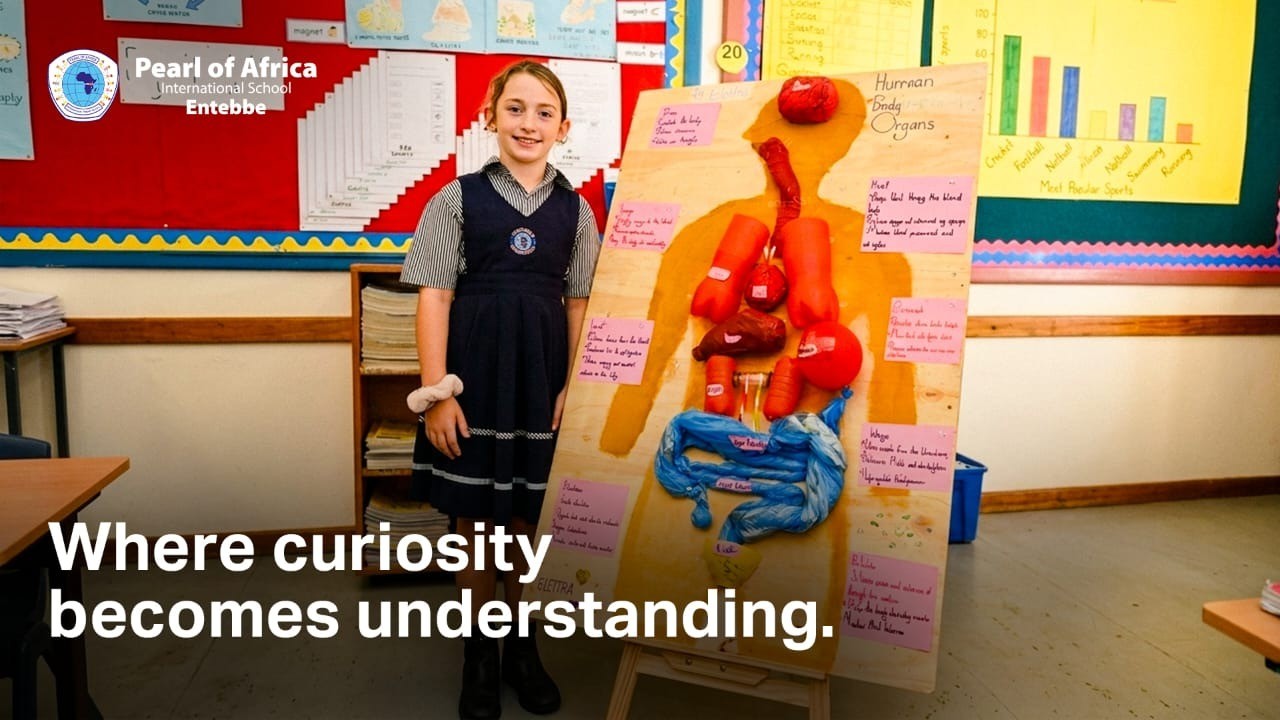
Standing beside their projects, learners welcomed visitors, explained their findings, and responded thoughtfully to questions from teachers, parents, and fellow students. For young learners, these moments matter. They help build communication skills, self-assurance, and the ability to organise and express ideas clearly.
Many parents shared how impressed they were by the confidence their children demonstrated. Seeing learners speak with such ownership over their work highlighted an important aspect of education that is not always visible during everyday school routines. The ability to communicate ideas effectively is a skill that supports children throughout their educational journey and beyond.
Science Fair 2026 also showcased the collaborative nature of learning.
Many projects were developed through teamwork, giving learners the opportunity to plan together, share responsibilities, solve problems, and support one another. These experiences help children understand that learning is often strengthened through collaboration and that different perspectives can contribute to stronger outcomes.
The exhibition brought together learners from Lower Primary, Upper Primary, Lower Secondary, and Upper Secondary, each presenting projects that reflected months of inquiry, research, and collaboration. A panel comprising parents, teachers, and learners evaluated the projects based on scientific understanding, communication, presentation, organisation, and creativity. While outstanding projects were recognised across the different year groups, the day itself celebrated every learner who stepped forward to share their ideas, answer questions, and take part in the process of discovery.
As an International School in Uganda, creating opportunities for learners to learn from one another is an important part of the educational experience. Events such as the Science Fair encourage children to explore different perspectives, appreciate the ideas of others, and develop skills that are increasingly valuable in today’s world.
For teachers, the fair provided an opportunity to see months of learning come to life. Classroom discussions, research activities, experiments, and moments of discovery all found expression in the projects displayed throughout the day. It was rewarding to see learners take ownership of their work and present it with pride.
For parents, it was a celebration of progress. Not simply the finished displays, but the growth, effort, and perseverance that made those displays possible.
As we reflect on Science Fair 2026, we are reminded that education is at its strongest when learners are actively engaged in the process of discovery. When children are encouraged to ask questions, test ideas, communicate their thinking, and learn through experience, they develop skills that extend far beyond any single subject.
Learning does not end when the exhibition tables are cleared away. The questions sparked, the confidence gained, and the discoveries made have a way of staying with children long after the day itself has passed.
At Pearl of Africa International School Entebbe, these moments of discovery remain an important part of the learning journey. They encourage curiosity, build confidence, and help learners develop a deeper understanding of both themselves and the world around them.
Because sometimes the most memorable part of a science fair is not the project itself. It is the moment a child realises they have something meaningful to share, and the confidence to share it.