One of the most rewarding moments in education is hearing a child confidently explain something they have learned in their own words. Not because they memorised it for a test, but because they explored it, questioned it, and experienced it for themselves.
Children are naturally curious. They want to understand how things work, why things move, what causes change, and what happens when ideas are put into practice. When learning gives them the opportunity to investigate these questions, concepts become easier to understand and far more memorable.
This is particularly true in STEM education. Science, technology, engineering, and mathematics are often associated with formulas, theories, and technical knowledge. Yet for many children, these subjects come to life when they can build, experiment, observe, and explain what they discover.
Curiosity looks different at every age, but the desire to explore remains the same. From lower primary to upper secondary, children learn more deeply when they can ask questions, test ideas, and share what they discover helps them develop both knowledge and confidence.
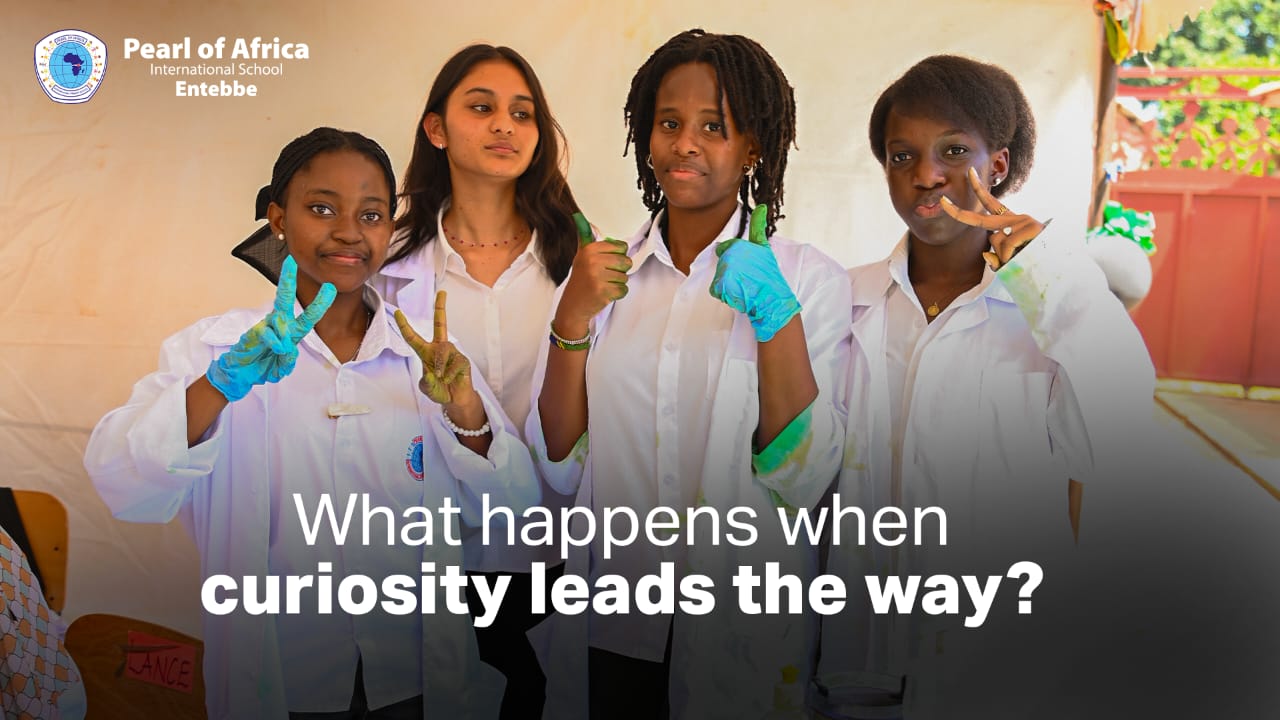
During Science Fair 2026, learners from Year One through to upper secondary in the International Section shared projects that brought their learning to life, reflecting both their understanding and their growing curiosity about the world around them.
What stood out was not only the variety of projects on display but also the way learners spoke about them. They were able to explain concepts, answer questions, demonstrate experiments, and communicate what they had learned with confidence.
Across the exhibition, learners explored ideas connected to science, health, engineering, and the world around them. As parents moved from one exhibition point to another, learners shared their projects with confidence, communicating their understanding and explaining how these concepts connect to everyday life.
Across the lower and upper secondary sections, many projects drew on real-world experiences and practical applications of science. Parents and visitors explored a wide range of topics alongside the learners, from force and motion to living and non-living things, health-related concepts, and chemical reactions. What stood out was the ease with which learners explained their thinking, answered questions, and helped others understand the ideas behind their work.
Behind each project was a process that extended well beyond the final presentation. Learners worked alongside teachers, collaborated with fellow students, receiving support and encouragement from parents throughout the journey. These experiences helped them learn how to plan, communicate their ideas, work through challenges, and contribute towards a shared goal.
Science fairs often showcase finished projects, but the most valuable learning happens long before the exhibition day arrives. From early ideas and classroom discussions to experiments, revisions, questions, and moments of discovery, learners gradually build their understanding as they explore new concepts. Along the way, they learn to adapt, work with others, and develop the confidence to present their thinking and findings to an audience. These are experiences that help children grow not only as learners but also as communicators, collaborators, and independent thinkers.
As an International Primary School, we believe that meaningful learning happens when children are given opportunities to engage with ideas in practical and purposeful ways. Whether they are exploring force in Year One or presenting scientific investigations in secondary school, each experience contributes to a deeper understanding of the world around them.
The Science Fair 2026 was a reminder of what children can achieve when curiosity is encouraged and learning extends beyond the pages of a textbook. Sometimes the most important lesson is not simply knowing the answer, but having the confidence to explore the question.