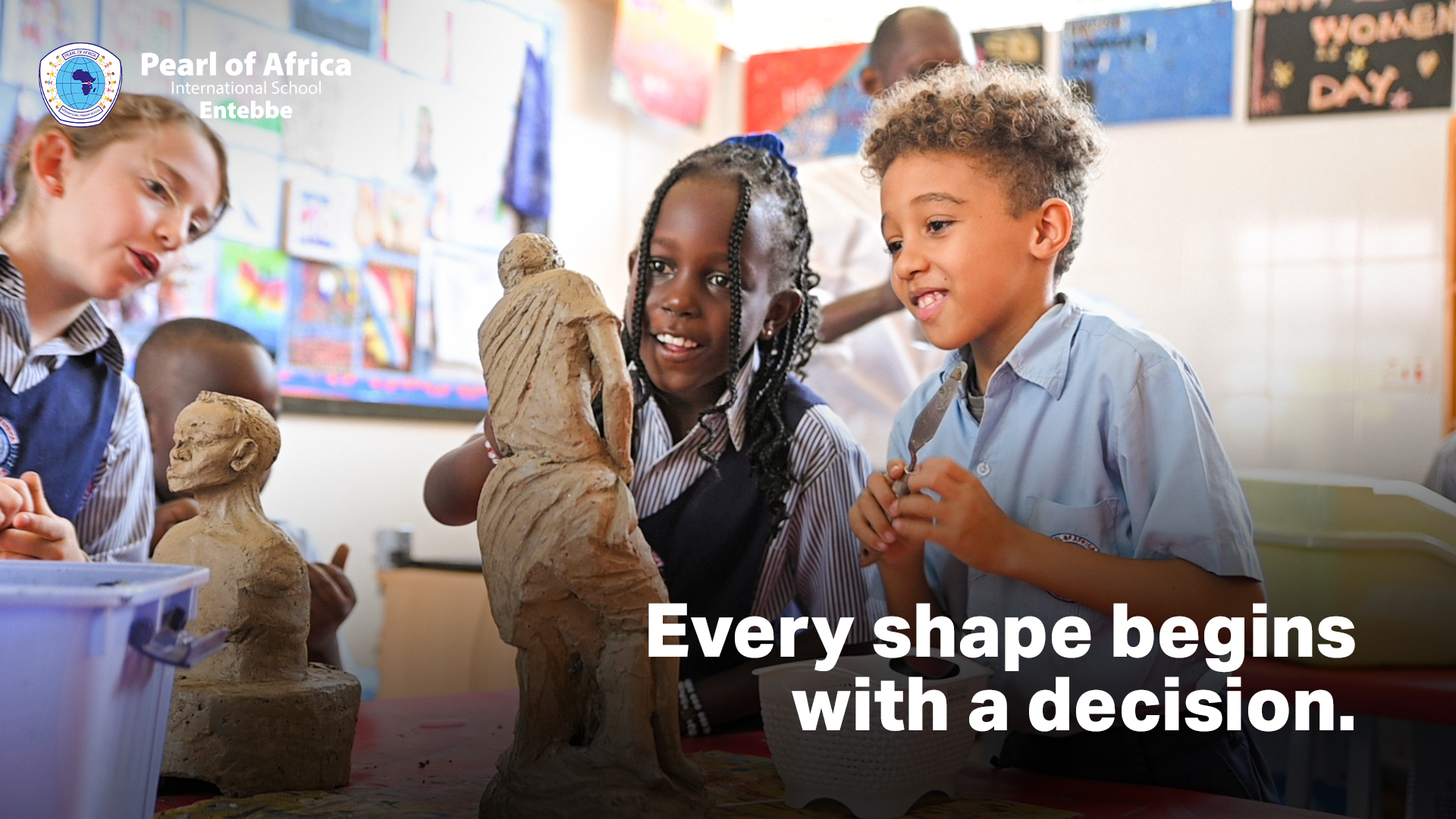
A child brings home a small clay figure. One arm is longer than the other, the base leans slightly, and the surface is covered in fingerprints. A parent may see a simple classroom project. The child remembers every choice, adjustment and second attempt that brought it to life.
The child chose where to begin, how much material to use and how to keep the figure standing. They pressed, rolled, joined and sometimes started again. What eventually reaches home is only the final piece. Much of the learning happened before it was complete.
This is why sculpture deserves a meaningful place in every primary art class.
Children spend much of their school day working on flat surfaces. They write on paper, read from books and look at screens. Sculpture introduces a different kind of thinking because the work has height, depth, weight and balance. A child has to consider how an object looks from every side and what will support it underneath.
When learners work with clay, playdough, papier-mâché or other modelling materials, their ideas become objects they can hold and examine. They begin to understand how separate forms come together to create something larger. A round piece may become a head, a flat piece may become a wing, and a narrow section may need extra support before it can stand.
With thoughtful guidance from the teacher, learners begin to notice what they may not yet see for themselves. They are encouraged to think about balance, proportion, texture and how different parts can be joined securely. The teacher asks questions, demonstrates techniques and helps each child find a way forward when an idea becomes difficult to build.
A learner who wants to make a tall sculpture soon discovers that the base may need to be wider or the top lighter. Two sections may need to be joined more carefully. These moments encourage children to test their ideas, observe what happens and make changes when something does not work as expected.
Sculpture also asks children to use their hands with purpose. As they press, pinch, roll and join pieces together, they gain the control needed to bring an idea to life. They learn how firmly to hold a tool, where to apply pressure and when to stop before a shape loses its form.
Because a sculpture develops gradually, learners have to stay with the process. They look more closely, notice when something feels unbalanced and decide whether a detail needs more work. A piece may lean, crack or fall apart, but it can often be reshaped, rejoined or approached differently. This helps children understand that a mistake can become part of the next step.
Sculpture also gives children another way to communicate. Some ideas are easier to build than to explain, and a finished piece can reveal what a child notices, remembers or imagines. It may be an animal, a person, a place or something entirely their own, but it carries their choices in every curve, mark and detail.
There is a particular sense of pride in completing something that can be held, turned around and viewed from different angles. When children explain how they made it, they are sharing more than a finished piece. They are sharing the decisions and adjustments behind it.
At Pearl of Africa International Primary School, our art classes give learners opportunities to explore different materials, techniques and ways of expressing their ideas. Sculpture forms part of that experience, allowing learners to work with their hands, solve practical challenges and make thoughtful decisions as they develop their ideas.
The fingerprints left behind are part of the story. They mark the places where a learner pressed, reshaped and tried again. By the time the sculpture is finished, the child has created more than an object; they have learned to stay with an idea until it takes shape.