What a child brings home from art class is usually the part adults notice first.
The print on fabric, the small sculpture, the beaded piece, the painting filled with colour. These are the visible outcomes. They are easy to admire because they show effort, creativity, and imagination in a form we can hold or display.
But the most important part of art class often happens before the finished work appears.
It happens while a child is deciding where to place a pattern, how much colour to use, how firmly to press, what to change, and when to keep going. It happens in the small pause before trying again, in the careful movement of a hand, and in the quiet confidence that grows when an idea begins to work.
For many parents, art may look like the lighter part of the school day. A time for children to enjoy colour, use different materials, and create something beautiful. At Pearl of Africa International School, we see it as part of a child’s wider learning journey.
Art gives learners room to think in a way that feels active and personal. They are not simply copying a final example or working towards something neat for display. They are learning to observe, plan, test, adjust, and express ideas through materials they can touch and shape.
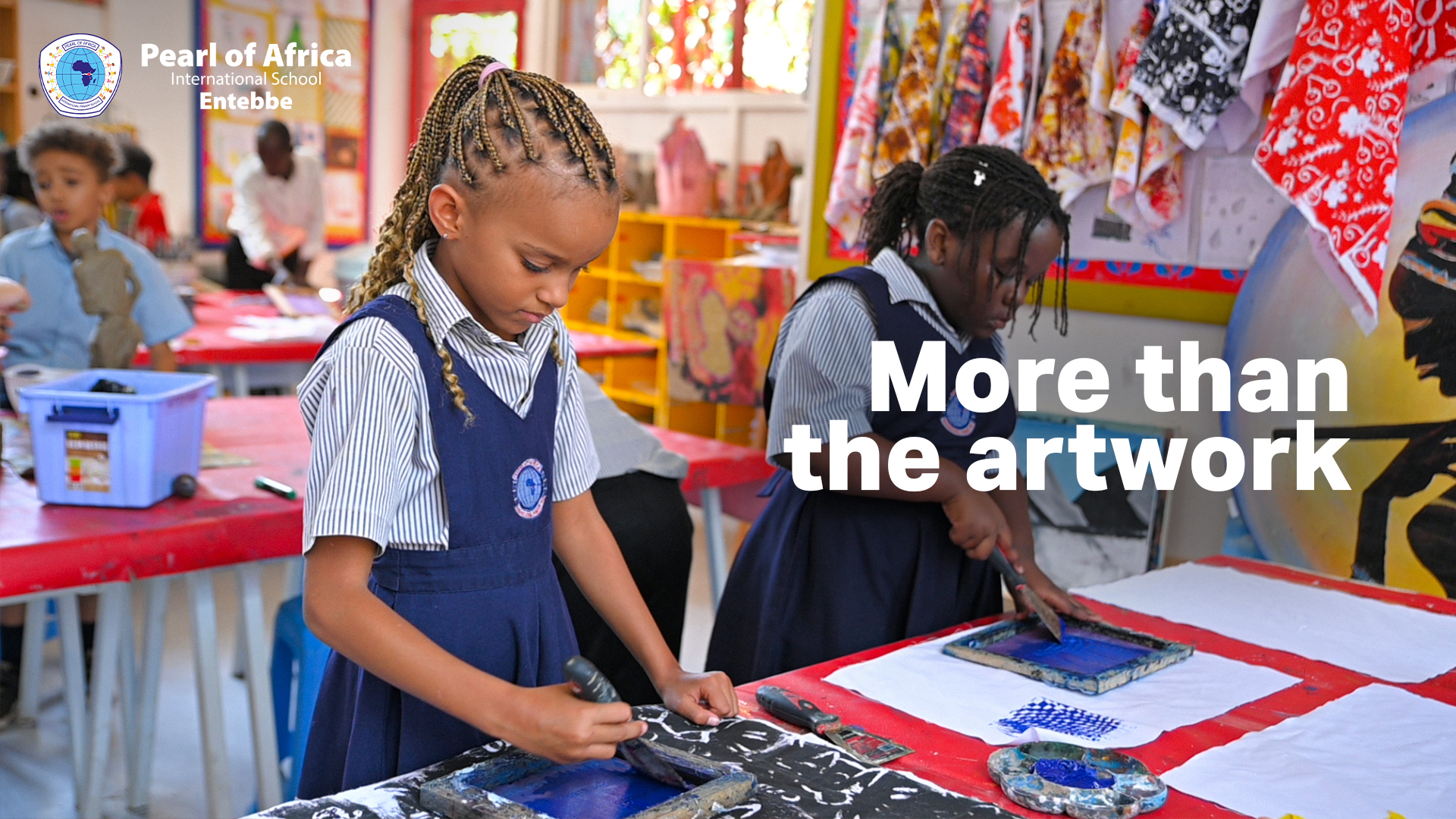
This becomes clear in activities such as screen printing.
Before the colour reaches the fabric, a learner has to think ahead. They need to understand the design, the direction of the print, the pressure required, and the way the image may transfer. The result is not always instant, and it is not always perfect the first time. That waiting, watching, and trying again teaches patience, planning, and attention to detail in a very practical way.
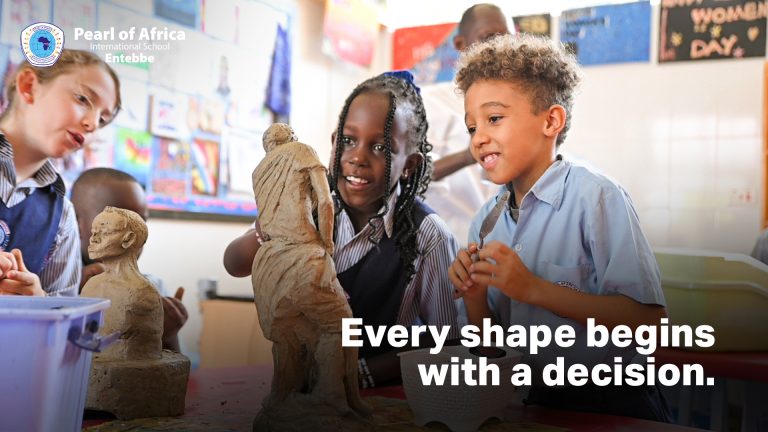
With sculpture, learners begin to think about form, balance, and structure. They discover that an idea needs support if it is going to stand or hold together. A small change can affect the whole piece, so they learn to adjust carefully and make decisions with focus.
Beads and glue may look playful, but they ask children to slow down. They think about pattern, spacing, colour, and arrangement. Painting gives them another kind of freedom, where movement, imagination, and personal expression come together. Each material asks something different from the learner, and each activity strengthens a different part of their thinking.
The beauty of art class is that the materials may be shared, but the outcomes are never exactly the same. One learner may be drawn to bold colour, another to small details, another to shape or texture. In that space, children begin to understand that their ideas can have their own form.
This matters because confidence does not only grow when a child gets everything right immediately. It grows when they meet a challenge and find another way through it. A print may not come out as expected. A bead may move out of place. A colour may look different on paper than it did in the tray. These small moments teach children that a challenge does not have to stop the work.
It can become part of how the work develops.
Art also creates a natural sense of community. Learners notice what others are making, ask questions, share materials, and see different approaches beside their own. They begin to understand that creativity does not have one fixed answer. This is especially meaningful in an international school environment, where children bring different experiences, cultures, and ways of seeing the world into the classroom.
Through colour, pattern, design, and texture, learners can express parts of who they are while appreciating the ideas of others.
There is also value in what happens after the work is finished. When a child’s artwork is displayed, it becomes part of the classroom and the wider school environment. It tells the child that their effort has been seen. It gives them pride and helps them feel that their work belongs in the space around them.
For a young learner, that can be a simple but powerful moment. It says, “I made this, and it has a place here.”
At Pearl of Africa International School, moments like these remind us that learning is not only found in books, assessments, or spoken answers.
Sometimes it is found in the patience behind a print, the care in arranging small details, the courage to try again, or the joy of seeing an idea become something real.
Art class may begin with paint, beads, glue, fabric, or clay, but it often leads to something much deeper.
Long before the artwork is finished, the learning has already begun.