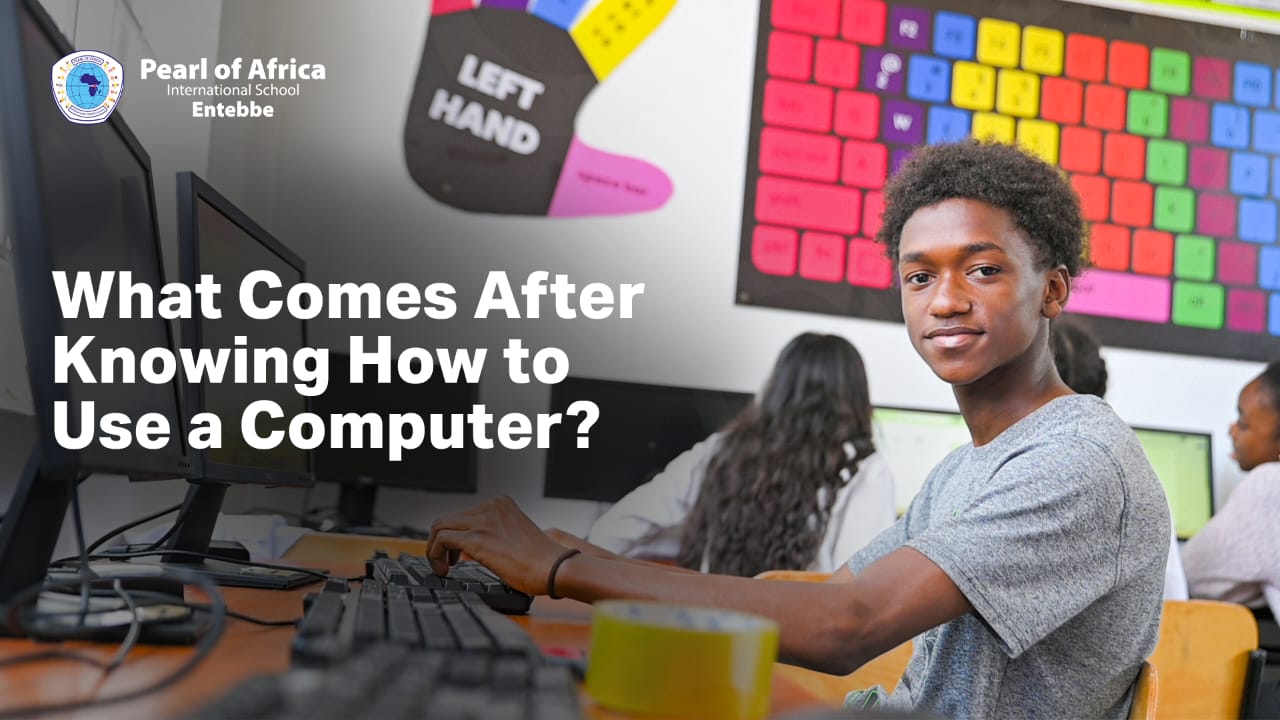
By upper primary, many pupils can open a program, find information online and put together a presentation without much difficulty. The more interesting question is what happens after that familiarity has been established. As schoolwork becomes more demanding, using technology well starts to involve judgement: deciding which tool suits a task, which information deserves attention, how to organise it and what to do when something does not work as expected.
A presentation is a simple example. Creating a few slides may be familiar, but deciding what belongs on them requires more thought. A pupil has to work out which information matters, how it should be organised and how to communicate an idea clearly to someone else. Give the same pupil a set of results from a class activity and a spreadsheet may be more useful, allowing the information to be arranged, calculated and interpreted.
Gradually, the question moves beyond how do I use this program? Pupils begin considering which digital tool makes sense for the task in front of them and what that tool can help them achieve.
Research brings another challenge. A search engine can produce an answer almost instantly, but pupils still have to decide what deserves their trust. Who published the information? Is it current? Does another reliable source support it? Have they understood what they found well enough to explain it themselves?
These decisions become increasingly relevant in upper primary as research becomes part of more independent schoolwork. Learning to search carefully, compare information and make sense of different sources gives pupils something far more useful than a page of copied facts.
At Pearl of Africa International School, these skills can move with pupils across the school day. A science investigation may leave them with results to organise and interpret. Global Perspectives may require them to research an issue and compare information from different sources.
Another lesson may ask them to turn what they have learnt into a presentation that someone else can follow. In each case, technology supports the learning taking place within the subject and gives pupils another way to explore and communicate their understanding.
Some of the most useful ICT lessons can also emerge when the screen does not show what a pupil expected.
A formula may produce the wrong result, or a piece of code may behave differently from what was intended.
Working out why means returning to the process, checking each step and trying another approach. Block coding can make this particularly visible because one misplaced instruction can change what happens next.
Working through these moments gives pupils practice in breaking a problem down and testing possible solutions. Over time, they can become more comfortable investigating what went wrong and making adjustments themselves, a habit that can support the way they approach challenges elsewhere in their learning.
As pupils become more independent with technology, good judgement also extends to how they behave online. Understanding what information should remain private, why passwords matter, how to communicate respectfully and when an online situation should be brought to an adult are becoming practical parts of growing up around digital spaces.
Upper primary is an important time for these conversations because pupils are gaining independence while still benefiting from regular guidance at school and at home. ICT lessons give pupils space to have these conversations while they are actually learning to use technology for themselves.
At Pearl of Africa International School, this is part of helping pupils develop a thoughtful approach to technology. The skills built through ICT become more meaningful when pupils can carry them into their research, projects, problem-solving and everyday learning.
The programs and devices pupils use will continue to change, but the habits they develop along the way can stay with them. A pupil who can approach an unfamiliar task, choose an appropriate tool, question the information they find and work through a problem has something they can carry into the next stage of their education.
Perhaps that is a more useful way to think about ICT in upper primary.
Knowing how to operate a computer matters, but understanding how to use one thoughtfully, responsibly and with purpose is where those skills begin to shape the way a pupil learns.